As parents, we all want our children to grow into responsible, confident, and independent individuals. One simple yet highly effective tool that can help achieve this goal is a chore chart. While chores may seem like small daily tasks, they teach valuable life skills that benefit children for years to come.
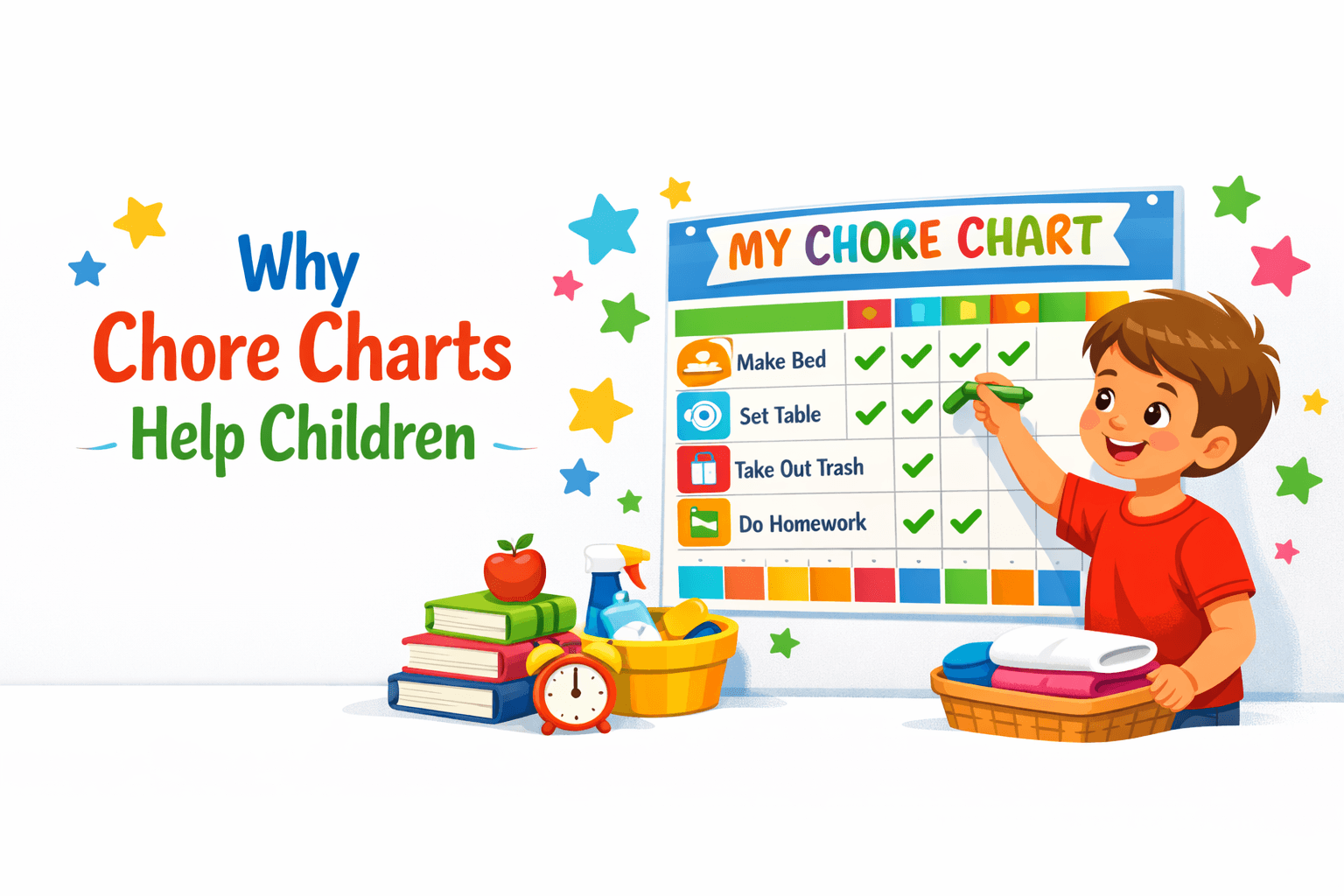
A chore chart provides structure, accountability, and motivation while helping children understand the importance of contributing to their home and personal responsibilities. Whether your child is a preschooler, kindergartener, or older student, chore charts can play a powerful role in their development.
What Is a Chore Chart?
A chore chart is a visual tool that helps children track and complete daily or weekly responsibilities. Tasks may include:
- Making their bed
- Brushing teeth
- Cleaning up toys
- Feeding a pet
- Organizing school supplies
- Helping with simple household tasks
By seeing their responsibilities clearly outlined, children learn what is expected of them and develop consistency in completing tasks.
1. Chore Charts Teach Responsibility
One of the biggest benefits of chore charts is teaching responsibility.
Children begin to understand that everyone in the family has a role to play. Completing tasks regularly helps them learn accountability and follow-through. Over time, children become more dependable and take greater ownership of their actions.
When children consistently complete chores, they learn that responsibilities are a normal part of everyday life.
2. They Help Build Independence
Children naturally enjoy feeling capable and trusted.
When given age-appropriate chores, they learn how to complete tasks without constant reminders. This builds confidence and encourages independence.
Simple responsibilities such as putting away toys or preparing a backpack for school help children develop self-management skills that will benefit them throughout life.
3. Chore Charts Create Positive Daily Habits
Consistency is one of the keys to building strong habits.
A chore chart provides a structured routine that encourages children to complete tasks regularly. Over time, these repeated actions become healthy habits.
Examples include:
- Brushing teeth twice daily
- Keeping rooms tidy
- Completing homework
- Practicing self-care routines
These habits often continue into adulthood.
4. They Improve Organization Skills
Many children struggle with organization and time management.
A chore chart helps children visually understand their daily responsibilities and priorities. As they learn to manage tasks, they develop better planning and organizational skills.
These skills can support success in school, extracurricular activities, and future responsibilities.
5. Chore Charts Increase Confidence
Children feel proud when they accomplish goals.
Checking off completed tasks provides a sense of achievement and progress. This positive reinforcement boosts self-esteem and encourages children to continue taking responsibility for their work.
Even small accomplishments can make a significant difference in a child’s confidence.
6. They Reduce Daily Power Struggles
Many parents find themselves repeating the same reminders every day.
A chore chart acts as a visual reminder, reducing the need for constant prompting. Instead of repeated instructions, children can refer to their chart and complete tasks independently.
This often creates a more positive and cooperative home environment.
7. Chore Charts Teach Valuable Life Skills
Beyond cleaning and organizing, chore charts help children develop important life skills such as:
- Responsibility
- Time management
- Self-discipline
- Goal setting
- Accountability
- Problem-solving
These skills prepare children for future success both inside and outside the classroom.
Choosing Age-Appropriate Chores
To keep children motivated, choose tasks that match their age and abilities.
Preschoolers (Ages 3–5)
- Put toys away
- Make the bed with help
- Place clothes in laundry basket
- Feed pets with supervision
Kindergarten & Early Elementary (Ages 5–8)
- Set the table
- Organize school supplies
- Water plants
- Clean up play areas
Older Children (Ages 8+)
- Load dishwasher
- Help prepare simple meals
- Vacuum rooms
- Manage homework schedules
Making Chore Charts Fun
Children are more likely to participate when chores feel rewarding.
Try:
- Colorful printable chore charts
- Sticker rewards
- Progress tracking systems
- Weekly goals
- Small incentives for consistency
Making chores engaging helps children stay motivated and excited about their progress.
Final Thoughts
Chore charts are more than just organizational tools. They help children develop responsibility, confidence, independence, and lifelong habits that contribute to personal growth and success.
By introducing a simple chore chart routine, parents can encourage positive behavior while creating a structured environment where children can thrive.
Whether you’re homeschooling, supporting early learning, or simply looking for ways to build responsibility at home, a chore chart can be one of the most effective tools you use.
Start small, stay consistent, and watch your child grow into a more confident and responsible individual.