Teaching responsibility is one of the most valuable gifts parents can give their children. Responsible kids grow into confident, independent adults who understand the importance of completing tasks, making good choices, and contributing positively to their families and communities.
The good news is that responsibility is not something children are born with it is a skill that can be taught and strengthened through daily habits, routines, and encouragement.
Why Responsibility Matters for Children
Responsibility helps children develop important life skills that support both academic and personal success. When children learn to take ownership of their actions, they become more confident, organized, and dependable.
Some key benefits of teaching responsibility include:
- Improved self-confidence
- Better decision-making skills
- Increased independence
- Stronger problem-solving abilities
- Better time management
- Greater respect for others
Children who understand responsibility are often better prepared to handle challenges and make positive choices as they grow.
Start with Age-Appropriate Responsibilities
One of the most effective ways to teach responsibility is by assigning tasks that match a child’s age and abilities.
Preschoolers (Ages 3–5)
Young children can begin learning responsibility through simple daily tasks such as:
- Putting toys away after playtime
- Placing dirty clothes in a laundry basket
- Feeding a pet with supervision
- Helping set the table
These small responsibilities help children understand that they play an important role within the family.
Elementary-Age Kids (Ages 6–10)
As children grow, they can take on additional responsibilities, including:
- Making their bed
- Organizing school supplies
- Completing homework independently
- Packing their school bag
- Following daily routines
Giving children ownership of these tasks encourages independence and accountability.
Create Consistent Daily Routines
Children thrive when they know what is expected of them.
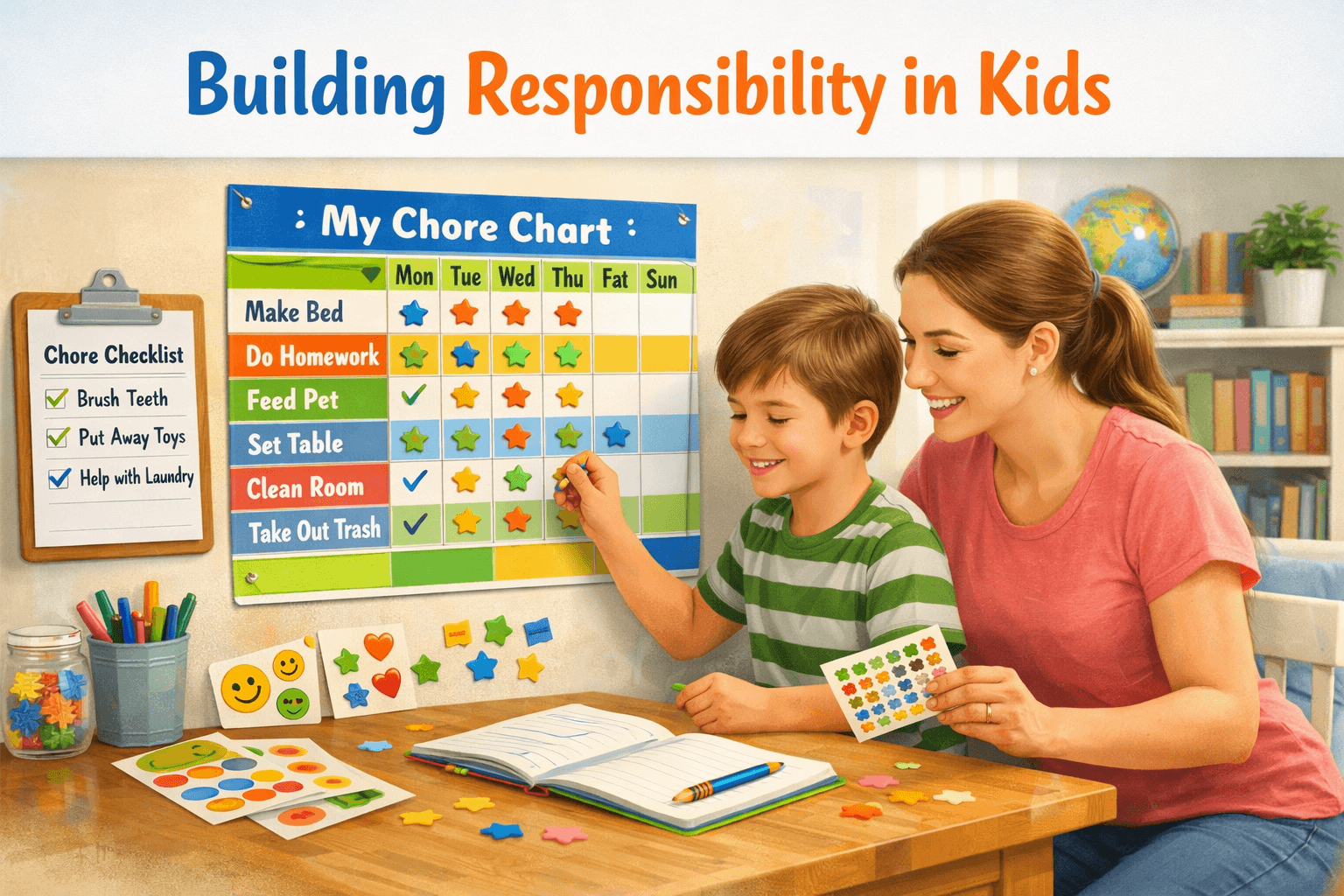
A consistent daily routine helps build responsibility by creating structure and predictability. Morning routines, homework schedules, chore charts, and bedtime routines teach children to manage tasks independently.
Simple routines can include:
- Brushing teeth
- Getting dressed
- Completing homework
- Cleaning up after activities
- Preparing for the next day
The more consistent the routine, the easier it becomes for children to develop responsible habits.
Use Chore Charts and Responsibility Trackers
Visual tools can make responsibility more enjoyable and motivating for children.
Printable chore charts and responsibility trackers help children:
- Understand expectations
- Track completed tasks
- Build consistency
- Feel proud of their achievements
Many parents find that children become more engaged when they can visually see their progress.
Teach Accountability Instead of Perfection
Learning responsibility does not mean children must be perfect.
Mistakes are part of the learning process. When children forget a task or make a poor choice, use the experience as a teaching opportunity rather than immediately stepping in to fix the problem.
Encourage children to:
- Recognize mistakes
- Think about solutions
- Learn from consequences
- Try again with confidence
This approach helps build resilience and long-term responsibility.
Encourage Positive Decision-Making
Responsibility goes hand-in-hand with making good choices.
Parents can encourage decision-making by allowing children to make age-appropriate choices, such as:
- Choosing their outfit
- Selecting a healthy snack
- Deciding the order of daily tasks
- Planning parts of their routine
Providing opportunities to make choices helps children develop confidence and ownership.
Praise Effort and Progress
Children respond positively to encouragement.
Instead of focusing only on results, celebrate effort and improvement. Positive reinforcement helps children stay motivated and continue practicing responsible behaviors.
Examples include:
- Verbal praise
- Stickers or reward charts
- Extra playtime
- Special privileges
Acknowledging progress reinforces positive habits over time.
Lead by Example
Children learn more from what they see than what they hear.
Parents who demonstrate responsibility through their own actions teach powerful lessons. Showing consistency, keeping commitments, and completing responsibilities can inspire children to do the same.
When children observe responsible behavior regularly, they are more likely to adopt those habits themselves.
Final Thoughts
Building responsibility in kids is a gradual process that begins with small daily habits and consistent guidance. Through routines, chores, positive reinforcement, and age-appropriate expectations, parents can help children develop essential life skills that will benefit them throughout their lives.
Remember, responsibility is not about perfection. It is about helping children learn, grow, and become confident individuals who understand the value of contributing, caring, and making thoughtful choices every day.