Screen time has become a regular part of daily life for many children. While technology can be useful for learning, too much screen exposure can reduce physical activity, creativity, and family interaction. That’s why many parents are looking for fun screen-free activities for kids that encourage learning, imagination, and healthy development.
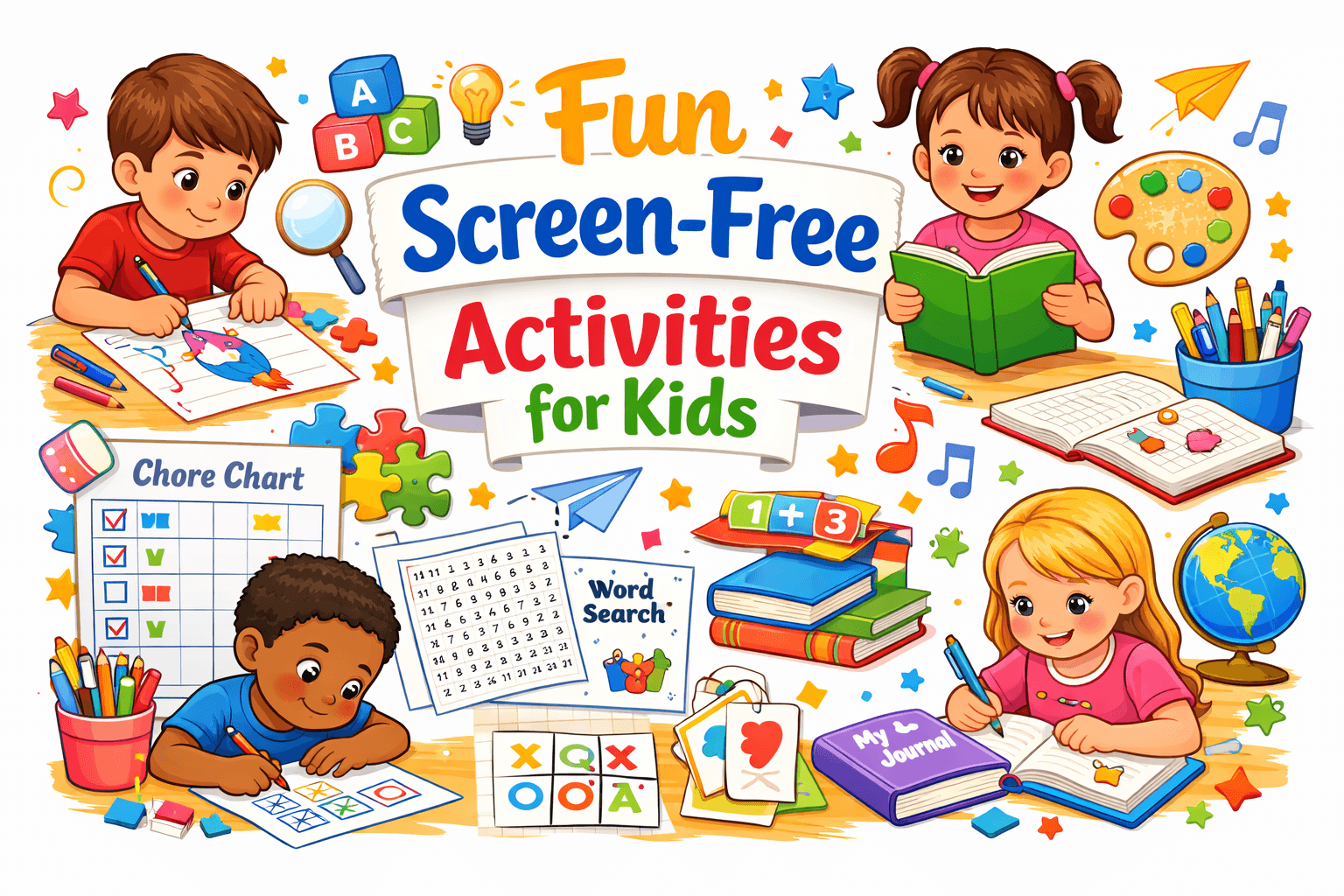
The good news is that children don’t need tablets, phones, or video games to stay entertained. With the right activities, kids can learn new skills, build confidence, and have fun while spending quality time away from screens.
In this guide, we’ll explore 15 fun screen-free activities for kids that are perfect for preschoolers, kindergarten learners, and young children.
Why Screen-Free Activities Matter
Screen-free activities help children:
- Improve creativity and imagination
- Develop problem-solving skills
- Build focus and concentration
- Encourage social interaction
- Support physical and mental development
- Create healthy daily habits
Balancing screen time with hands-on learning activities can help children become more engaged, active, and confident learners.
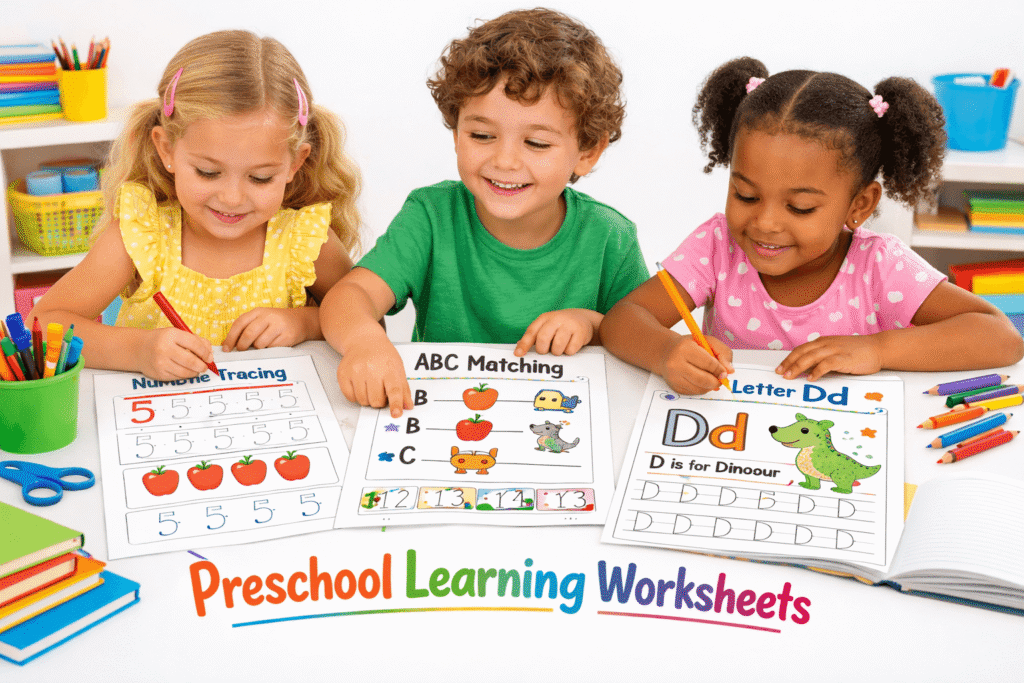
1. Printable Learning Worksheets
Educational worksheets are one of the easiest ways to keep children engaged while learning important skills.
Printable worksheets can help kids practice:
- Alphabet recognition
- Counting skills
- Reading readiness
- Writing practice
- Problem-solving
Parents and teachers love printable learning resources because they are easy to use and can be printed anytime.
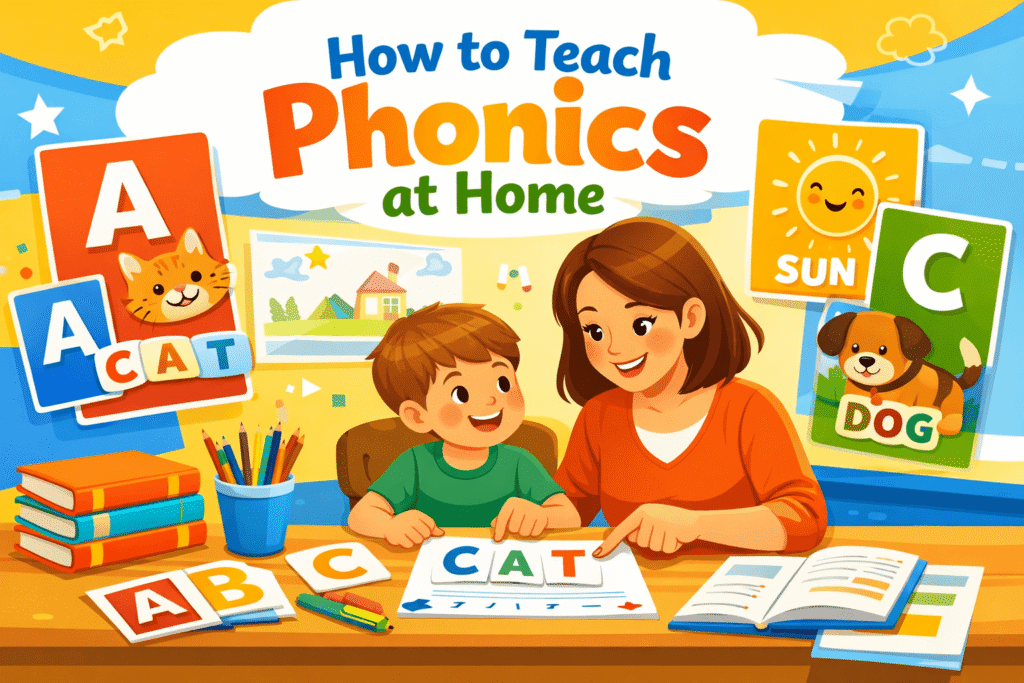
2. Phonics Practice Activities
Learning to read can be exciting when phonics activities are turned into games.
Fun phonics activities include:
- Letter sound matching
- Word building exercises
- Reading challenges
- Tracing activities
- Rhyming games
These activities help children develop early literacy skills while having fun.
3. Creative Drawing Time
Give kids blank paper, crayons, markers, or colored pencils and let their imagination run free.
Drawing encourages:
- Creativity
- Fine motor skills
- Self-expression
- Problem-solving
Ask children to draw their favorite animal, dream house, or family adventure.
4. Learning Journals
Keeping a daily journal helps children reflect on their experiences and practice writing skills.
Children can write about:
- What they learned today
- Their favorite activity
- New words they discovered
- Things they are grateful for
Learning journals also help improve communication and critical thinking skills.
5. Chore Charts & Responsibility Activities
Simple household responsibilities can teach children valuable life skills.
Examples include:
- Making the bed
- Organizing toys
- Watering plants
- Feeding pets
- Cleaning study areas
Printable chore charts make these tasks more engaging and rewarding.
6. Reading Together
Reading books is one of the best screen-free activities for kids.
Benefits include:
- Improved vocabulary
- Better comprehension
- Enhanced imagination
- Stronger parent-child bonding
Try setting aside 20 minutes each day for family reading time.
7. Puzzle Challenges
Puzzles encourage children to think critically and solve problems independently.
Popular options include:
- Jigsaw puzzles
- Word puzzles
- Number puzzles
- Logic games
Puzzles help improve patience and concentration.
8. Indoor Treasure Hunts
Create a simple treasure hunt using clues around the house.
Children enjoy:
- Following directions
- Solving clues
- Exploring new spaces
Treasure hunts can also be educational by including math or reading challenges.
9. Arts and Crafts Projects
Arts and crafts help children develop creativity while improving fine motor skills.
Simple ideas include:
- Paper animals
- Greeting cards
- DIY bookmarks
- Collages
- Seasonal decorations
Kids love creating something they can proudly display.
10. Nature Exploration
Spend time outdoors observing plants, birds, insects, and weather changes.
Nature exploration helps children:
- Stay active
- Learn about science
- Develop curiosity
- Reduce screen dependency
Encourage kids to keep a nature observation journal.
11. Educational Activity Books
Activity books provide structured learning opportunities without screens.
They often include:
- Mazes
- Coloring pages
- Matching games
- Tracing exercises
- Problem-solving activities
These resources are perfect for independent learning.
12. Habit Tracking Activities
Teaching healthy habits early can have long-term benefits.
Children can track:
- Reading goals
- Daily chores
- Exercise routines
- Water intake
- Kindness activities
Habit trackers make progress visible and motivating.
13. Storytelling Adventures
Storytelling encourages imagination and communication skills.
Ask children to:
- Create their own stories
- Invent characters
- Describe exciting adventures
- Tell stories using pictures
This activity supports language development and creativity.
14. Family Board Games
Board games are excellent for developing social skills while having fun.
Children learn:
- Patience
- Teamwork
- Strategy
- Communication
Family game nights also strengthen relationships.
15. Printable Educational Bundles
Educational bundles combine multiple learning resources into one convenient package.
These may include:
- Worksheets
- Journals
- Chore charts
- Phonics activities
- Planners
- Progress trackers
Bundles provide a variety of screen-free learning opportunities for children.
Final Thoughts
Finding fun screen-free activities for kids doesn’t have to be difficult. Simple educational resources, creative projects, reading activities, and learning games can keep children engaged while supporting healthy development.
By incorporating more screen-free learning opportunities into daily routines, parents can help children build confidence, creativity, and important life skills that last a lifetime.
Whether you’re homeschooling, supporting early education, or simply looking for meaningful activities at home, screen-free learning can make every day more enjoyable and productive for your child.