Learning to read is one of the most important milestones in a child’s early education. One of the most effective ways to build strong reading skills is through phonics. The good news is that parents do not need to be professional teachers to help their children learn phonics at home.
With the right approach, a few minutes of daily practice, and engaging learning activities, children can develop letter recognition, sound awareness, and early reading confidence from the comfort of home.
What Is Phonics?
Phonics is a method of teaching children how letters and groups of letters represent sounds in spoken language. Instead of memorizing entire words, children learn to connect letters with sounds and blend those sounds to read words.
For example:
- B says /b/
- A says /a/
- T says /t/
When blended, these sounds create the word “bat.”
Phonics helps children become confident readers because they learn how to decode new words independently.
Why Is Phonics Important?
Phonics plays a major role in early literacy development. Children who understand phonics often find it easier to:
- Learn to read independently
- Improve pronunciation
- Increase vocabulary
- Build spelling skills
- Develop reading confidence
- Strengthen comprehension skills
Teaching phonics early can create a strong foundation for lifelong learning.
Step 1: Start with Letter Sounds
Before introducing words, children should become familiar with individual letter sounds.
Focus on:
- The 26 alphabet letters
- Uppercase and lowercase recognition
- Common letter sounds
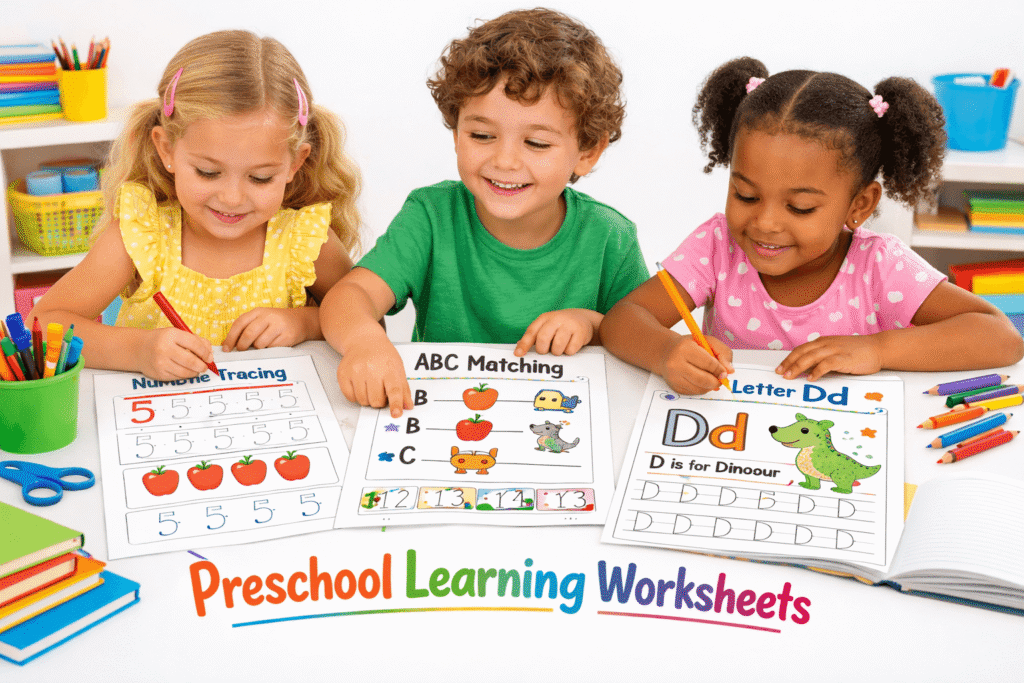
Try using flashcards, alphabet charts, or printable phonics worksheets to make learning interactive and fun.
Practice for 5–10 minutes each day rather than long study sessions.
Step 2: Teach Short Vowel Sounds
Short vowel sounds are often easier for beginners.
Examples include:
- A as in apple
- E as in elephant
- I as in igloo
- O as in octopus
- U as in umbrella
Using pictures helps children remember these sounds more effectively.
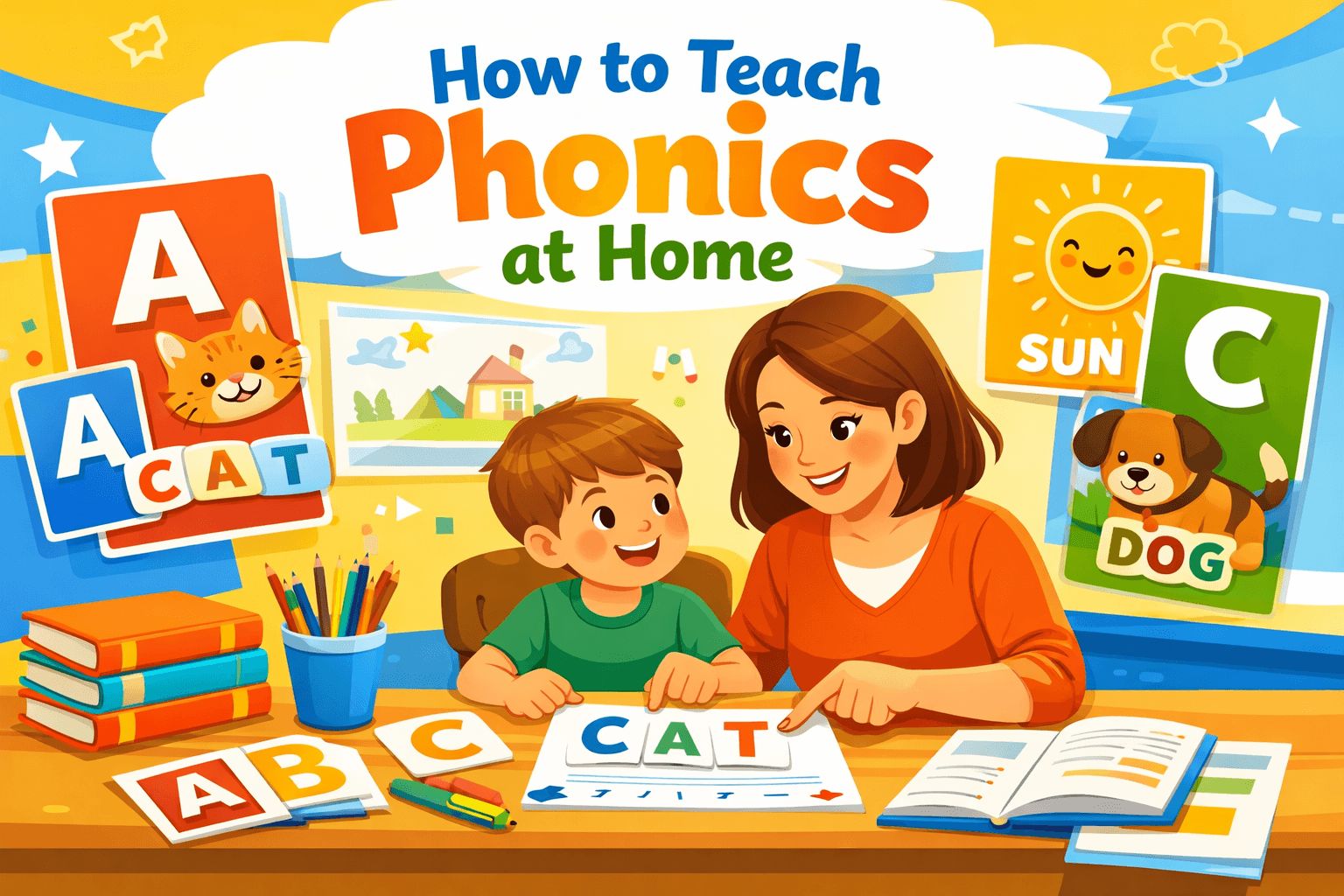
Step 3: Introduce Simple CVC Words
CVC stands for Consonant-Vowel-Consonant words.
Examples:
- Cat
- Dog
- Hat
- Sun
- Pig
Encourage children to sound out each letter individually and then blend the sounds together.
For example:
C – A – T
becomes
Cat
This blending practice is one of the most important phonics skills.
Step 4: Use Fun Printable Activities
Children learn best when learning feels like play.
Printable phonics activities can make practice exciting and engaging.
Some effective activities include:
- Letter tracing worksheets
- Sound matching games
- Word-building exercises
- Phonics coloring pages
- Reading practice sheets
- Beginning sound activities
Hands-on learning keeps children motivated and interested.
Step 5: Read Together Daily
Reading aloud is one of the simplest ways to reinforce phonics skills.
Choose books with:
- Simple vocabulary
- Repeating words
- Short sentences
- Large text
- Clear illustrations
Encourage your child to identify sounds and letters while reading.
Even 10–15 minutes per day can make a significant difference.
Step 6: Practice Blends and Digraphs
Once children master basic sounds, introduce blends and digraphs.
Examples:
Blends
- Bl
- Cl
- St
- Tr
Digraphs
- Ch
- Sh
- Th
- Wh
These combinations help children read more complex words and improve fluency.
Step 7: Create a Consistent Learning Routine
Consistency is more effective than long study sessions.
A simple daily phonics routine might look like:
5 Minutes
Review the letter sounds
5 Minutes
Practice worksheets
5 Minutes
Read together
5 Minutes
Play a phonics game
Just 20 minutes per day can lead to steady improvement.
Common Mistakes Parents Should Avoid
When teaching phonics at home, try to avoid:
- Teaching letter names before sounds
- Moving too quickly
- Long learning sessions
- Correcting every mistake immediately
- Making learning feel stressful
Keep activities positive, encouraging, and enjoyable.
Best Resources for Teaching Phonics at Home
Helpful resources include:
- Printable phonics workbooks
- Letter tracing activities
- Sound recognition worksheets
- Reading practice pages
- Alphabet games
- Educational flashcards
Combining multiple learning methods helps children stay engaged.
Final Thoughts
Teaching phonics at home does not have to be complicated. By focusing on letter sounds, simple words, daily practice, and fun learning activities, parents can help children develop strong reading skills and build confidence.
The key is consistency, patience, and making learning enjoyable. With the right resources and encouragement, children can develop the foundation they need for successful reading and lifelong learning.